

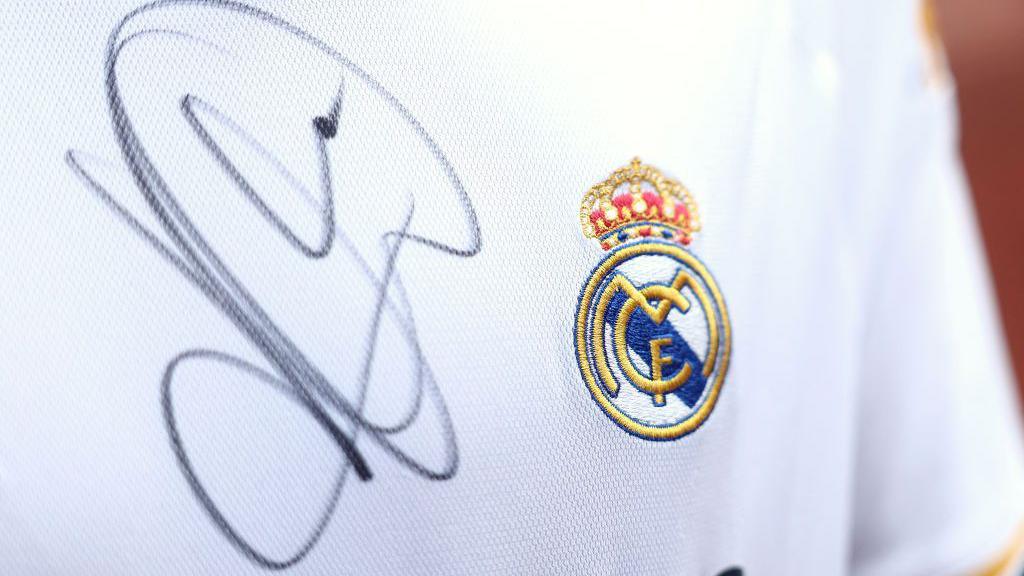
At the team's practice facility. At the traffic lights. At a petrol station. In a hotel lobby. Outside their family home.
The locations where footballers and coaches are confronted for autographs can vary from the ordinary and acceptable to the invasive and inappropriate.
Importantly, there exists a pair of different types of autograph seekers. There are the genuine fans seeking a keepsake to cherish for a lifetime, but also commercial dealers building up a collection of items to be listed for sale on the internet.
The hunters earning an income from obtaining signatures are often seasoned operators who confront players with prepared stacks of shirts and photographs, aiming to get as much signed as possible in a short window.
But how do the footballers who are targeted think, and are some of these encounters crossing a line?
In What Ways Do Signature Seekers Engage With Celebrities?
When a prominent coach was recorded refusing to autograph a jersey after a man approached his vehicle not long ago, he justified his actions against a backlash by stating he felt "vulnerable" and asserted some "individuals are not doing it for the proper motives".
In another case, a celebrated manager angrily chastised a group of hunters who approached him in a parking lot near his home, lambasting their career choice and stating, "Do not return - I won't tell you again. What do you aspire to?"
The athletic collectibles industry is estimated to be worth billions of dollars worldwide annually, highlighting the substantial wealth professional hunters can earn by regularly seeking out stars.
Teams sometimes have to step in and safeguard players, including prohibiting commercial dealers from conducting business near practice facilities, providing protection personnel at nearby gas stations where seekers are aware players stop, and in some cases assisting in guiding them to their residences.
One prominent midfielder was recorded instructing hunters to stop following him to his house after they had engaged in this on back-to-back days.
And more recently, a backline player was recorded humorously scrawling unenthusiastic autographs on a set of shirts given to him by a hunter who came up to him at his vehicle's window.
"Players get really fed up with it," says a ex-top-flight champion.
"I've experienced it numerous times. They wait near the TV studio and request that I autograph twelve identical shirts all at once. I questioned it the other day and said 'you're going to sell these on the internet, aren't you'?"
"It's so annoying that the purpose is to profit out of athletes. The decision lies with the person to make a split-second decision in the moment."
"If we say no, then the rejected individual will often insult the person who turned them down and publicly shame them online."
"This behavior is unacceptable as genuine autograph hunters must get fed up with these frauds who are doing it for the incorrect motives."
"These people ruin the experience for kids and true supporters."

What Do Athletes Feel About Professional Sellers?
The majority of athletes are happy to brighten a supporter's day by dedicating a brief instant with them and providing a signature.
But when frequent seekers appear, confrontations can occur, especially if their conduct is deemed pushy.
"You encounter the people who are eager to get your signature but also want to have a short interaction with you and establish a personal link," says a former England international. "That's all fine, but then you also get the ones that you see all the time."
"Some of them are very clever with the way they do it - they send their kids, or they arrive with friends."
"There have been times when confrontations have happened. I recall one where a guy tried having a go with me - he would hand you 20 of the same card, and you would either refuse to sign the entire stack or your signature would become less enthusiastic as it continued because you knew he was going to resell them."
In some instances players can understand the reasoning while refusing to tolerate rudeness.
"He would frankly admit he was going to flog them, but in his eyes that would cover the cost of his tickets," the former player adds. "The majority of supporters are really respectful and appreciative. They are never disrespectful until they don't get what they desire."
Are Some Genuine Fans Becoming Less Respectful?
During the rise of women's football, fans have traditionally had closer access to players than in the men's top flight. For the most part, those interactions are friendly, safe, and courteous.
But some players feel encounters have become progressively less polite and disrespectful in the past few years.
One England international revealed she was asked to sign by some of the same fans who had previously booed her during a match.
"There does seem to have been a change in the past few years - there feels to me more of a attitude of expectation with some fans now," states a ex-professional athlete.
"Supporters having greater proximity to players has been a key aspect of the distinct character of the women's game, and when I was playing we always wanted to make time for them," she adds.
"Nowadays, some individuals think because they've paid for a ticket they are entitled to the time of the players before or after the game."
"No athlete wants to snub the fans, but there are appropriate moments and locations, and possible safety concerns need to be considered."
"It requires mutual respect and it should be managed in a controlled, safe environment."
"It is essential to still facilitate those interactions so that aspiring players don't become disheartened and think 'the players I admire are indifferent to me'."
Fans Risk Buying Fakes Online
Products autographed by top names and then posted for sale by autograph hunters can fetch tens of thousands of pounds.
But not every piece of autographed collectibles purchased will prove to be legitimate.
In some cases, web shops are set up by scammers who create fakes by purchasing products before adding a fake signature - either by doing so themselves or hiring the services of skilled signature forgers.
One reason dishonest sellers can get away with their schemes is because autograph verification is an unregulated process in many countries. Most items come with a proof of genuineness, but that document is only as credible as the organization which awards it, and those entities can be completely unvetted.
Several years ago, a man was jailed after earning over a million from peddling fake


